About Panama · About the country
Flag of Panama
History, meaning and role in global shipping
The flag of Panama is more than a national symbol. It is one of the most recognizable flags in the world — and not only because it represents the Republic of Panama: every day it flies over thousands of ships crossing the oceans.
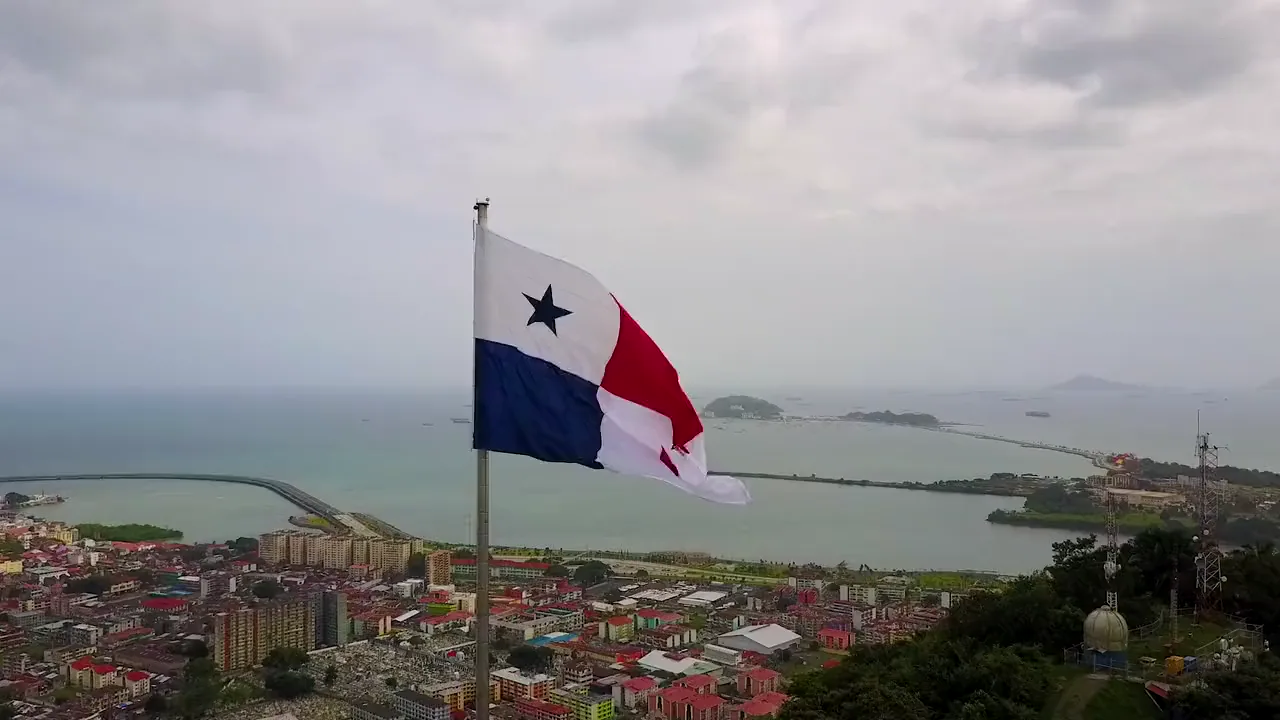
For a country known for the Panama Canal, international trade, logistics and real estate investment, the Panamanian flag tells a story that links independence, geography and global commerce.
How did the flag of Panama come about?
The story of the Panamanian flag begins in 1903 — the year Panama became an independent state.
Having separated from Colombia, the new republic needed a symbol that would express its national identity. The first design was proposed by a Frenchman, Philippe Bunau-Varilla: red and yellow stripes and a blue canton with two golden suns — the two Americas. Panama's leaders rejected it: the design was not national and looked too much like the flag of the United States.
The final version is credited to Manuel Encarnación Amador, son of Panama's first president, and the flag was sewn by María de la Ossa de Amador on the night of 1 November 1903. The idea was simple, elegant and deeply symbolic: a field of four equal quarters, two plain fields and two stars.
The Panamanian flag is made up of four rectangles:
Four quarters
- 1 · upper hoist — white with a blue star
- 2 · upper fly — red
- 3 · lower hoist — blue
- 4 · lower fly — white with a red star
At first glance the design looks minimalist and balanced. But every color and every symbol has its own meaning.
What do the colors and stars of the Panamanian flag mean?
Blue is traditionally associated with the Conservative Party and red with the Liberal Party. These two political forces played a central role in Panama's early history.
White stands for peace between them.
The blue star represents purity and honesty, and the red star authority, law and order.
Blue
Conservative Party
Red
Liberal Party
White
Peace between them
Blue star
Purity and honesty
Red star
Authority, law and order
In this sense the flag of Panama is more than a patriotic symbol. It is also a visible message about balance, unity and the aspiration to build a peaceful republic.
The flag was officially adopted in 1925. Ever since, it has remained one of the clearest and most recognizable national flags in Latin America.
What the flag of Panama means today

Today the Panamanian flag is everywhere: on government buildings and schools, in public squares, on official documents, at cultural events and national holidays.
For Panamanians it stands for independence, sovereignty and national pride.
But in the wider world the flag has another meaning too. It has become one of the most important maritime flags on the planet.
That makes Panama unique. Very few countries have a national symbol so closely tied not only to identity but also to world trade.
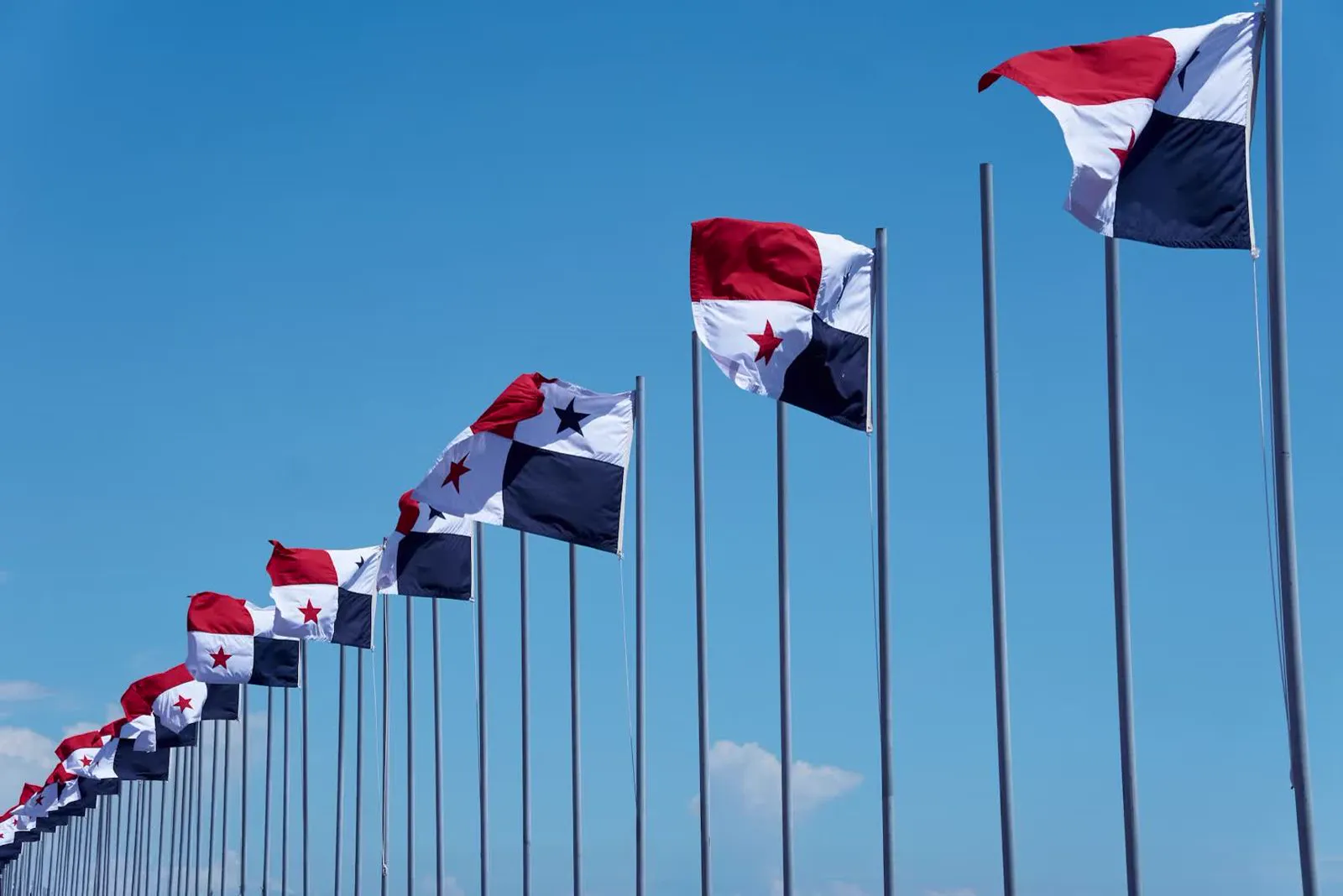
Why do thousands of ships sail under the flag of Panama?
One of the most curious facts about Panama: thousands of ships from many different countries sail under its flag.
Many of them do not belong to Panamanian companies. Their owners may be from Greece, Japan, China, Germany, Singapore, the United States and other major maritime nations.
So why do foreign ships choose the Panamanian flag? The answer is Panama's open ship registry.
Panama has built one of the most successful open registries in the world, allowing shipowners from any country to register their vessels under the Panamanian flag.
Thanks to this system, the Panamanian ship registry has become one of the largest in the world.
What draws shipowners to the Panamanian registry?
Shipowners choose the Panamanian flag for a number of practical reasons.
First, Panama offers an efficient registration system that is recognized worldwide. This matters to shipping companies: ships operate across borders, and their papers have to be accepted in ports all over the world.
Second, Panama allows foreign ownership. A shipowner does not need to be Panamanian to register a vessel under the Panamanian flag.
Third, the system is flexible for international crews and multinational shipping structures.
Fourth, operating costs in Panama are competitive compared with many traditional maritime jurisdictions.
Finally, Panama has long experience in maritime administration. The country that is home to the Panama Canal is naturally bound up with world shipping, logistics and international trade.
That is why the Panamanian flag is widely used by cargo ships, container ships, tankers, bulk carriers and many other merchant vessels.
The flag of Panama and world trade
Today the Panamanian flag is firmly associated with international shipping.
A ship flying the flag of Panama is legally linked to the Panamanian registry — even if its owner, crew and cargo come from different corners of the world.
That is why the Panamanian flag can be seen in ports across Asia, Europe, the Middle East, North and Latin America.
In a practical sense, the flag has become part of the infrastructure of globalization.
Panama is already famous for the Panama Canal — one of the most important trade routes on Earth. But the ship registry gives the country another weighty role in world trade.
The canal connects oceans.
The flag connects ships to the international legal and commercial system.
More than a “flag of convenience”
Yet that description does not fully explain Panama's maritime role.
For many shipowners Panama is not simply a low-cost option. It is a long-established maritime jurisdiction with global recognition, administrative experience and a strong position in international shipping.
In recent years Panama has also been working on compliance: tightening oversight and removing from the registry ships that do not meet the requirements.
This matters, because the future of shipping depends not only on flexibility and cost, but also on transparency, regulation and reputation.
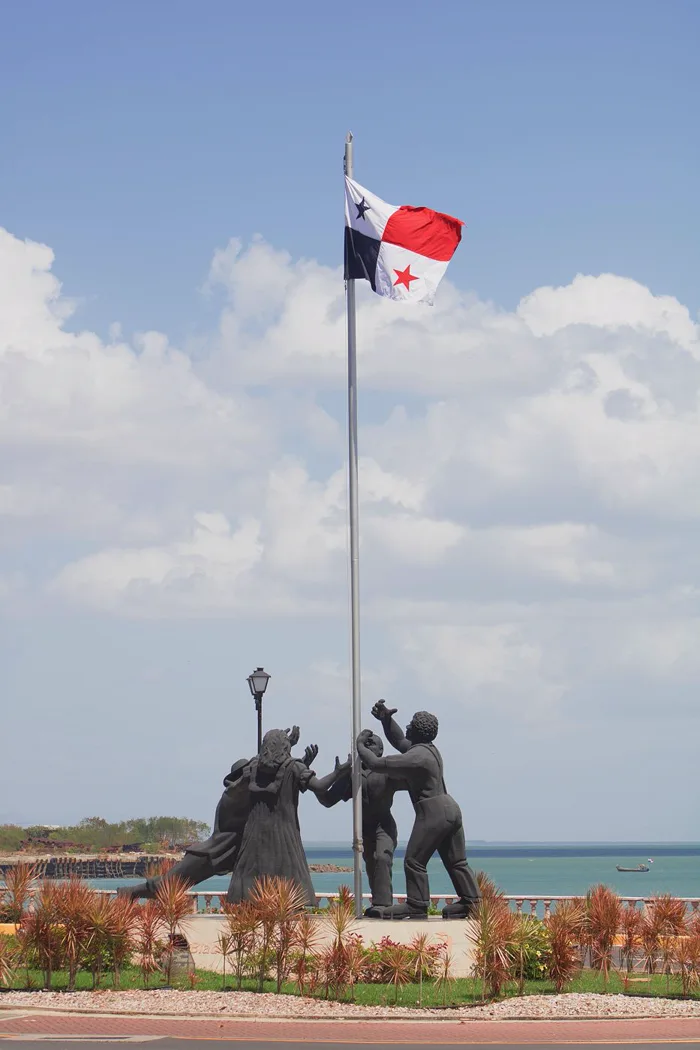
The flag of Panama as a symbol of the country's global role
The Panamanian flag began as the symbol of a young independent republic.
Today it also stands for Panama's position as one of the world's most important logistics and maritime hubs.
That is what makes the flag so significant. It tells the story of a country that connects continents, oceans and markets.
For travelers, investors and anyone interested in property in Panama, the flag is a vivid reminder of what makes this country unique.
Panama is not just a tropical country with beaches, modern real estate, investment opportunities and a growing international community.
It is also a strategic bridge between the Atlantic and the Pacific, between North and South America, between local identity and global business.
The flag of Panama captures this role perfectly: simple, balanced and instantly recognizable.
A national symbol that became a global maritime icon.