Panama citizenship:
requirements and the path to a passport
There is no shortcut and no citizenship for sale — but there is a clear legal path. Here is what the Constitution requires, how long it takes and what changes if you are married to a Panamanian or have a child born in Panama.
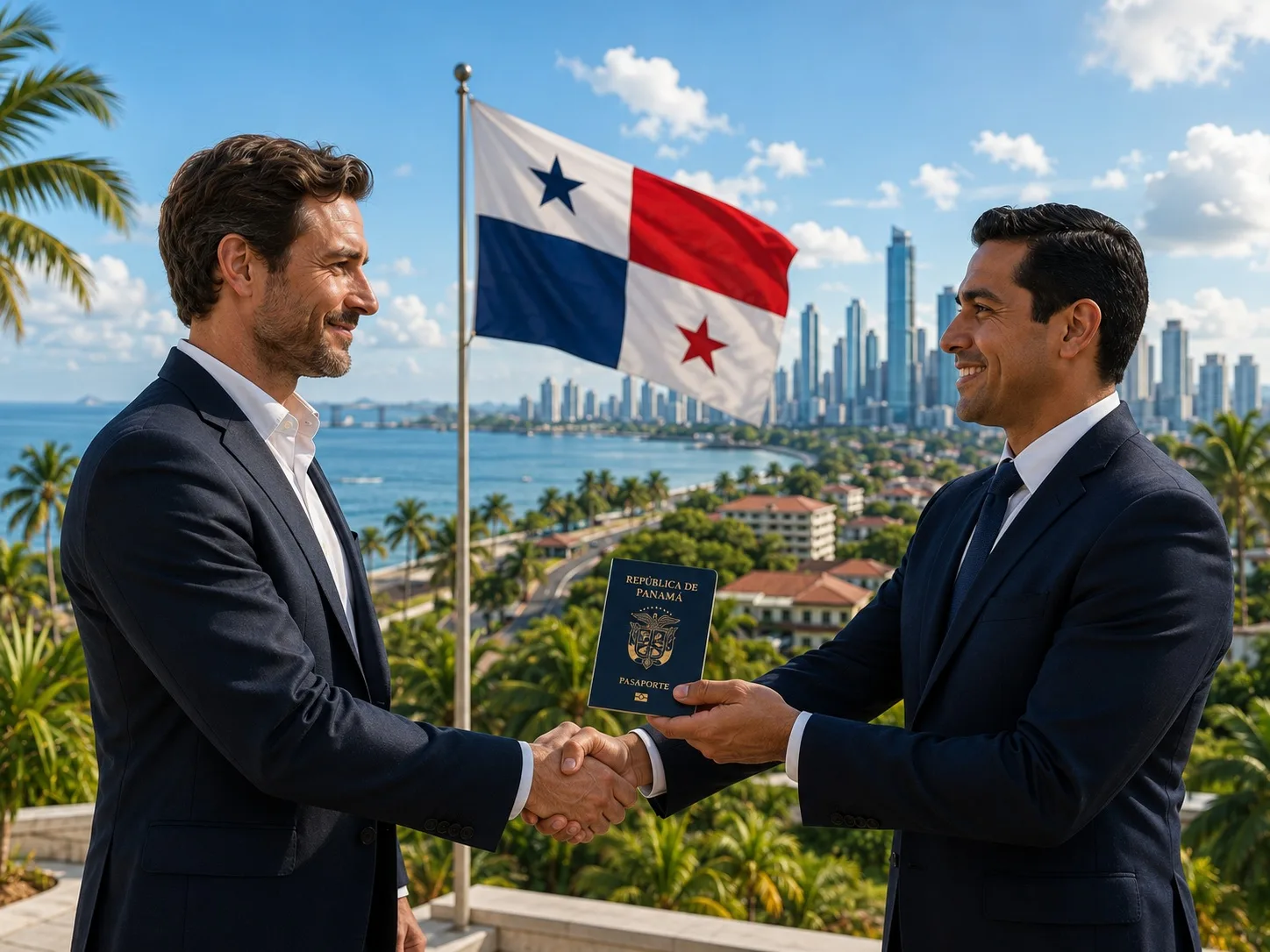
In short
- Citizenship is acquired by naturalization after five consecutive years of residence; in practice the clock starts with permanent residency.
- You must declare your intention, renounce your previous citizenship, speak Spanish and pass an exam on Panama's history, geography and civic institutions.
- Three years instead of five if you are married to a Panamanian, or your child born in Panama has a Panamanian father or mother.
- A child born in Panama is Panamanian by birth — but this does not make the parents citizens.
- Buying property can lead to residency, not directly to citizenship.
Citizenship is a path, not a purchase
One of the most common misconceptions about Panama is that buying property automatically leads to a passport. It does not. Panama has no direct citizenship-by-investment program. What the country offers instead is more durable: an investment can help you obtain residency, and citizenship comes later — through naturalization, once you have met the legal residence requirements and shown real ties to Panama.
Picture a ladder: each rung rests on the one below it. Citizenship is rarely the reason people move — but after a few years, many discover that Panama has become far more than an investment destination, and citizenship becomes the natural next step.
Three ways to become Panamanian
The Constitution (Article 8) recognises three ways to acquire Panamanian nationality:
Anyone born in Panama, and, under conditions, children of Panamanians born abroad (see “Citizenship by descent” below).
For foreign residents who meet the residence, language and knowledge requirements. This is the path for property buyers and retirees.
Children born abroad and adopted by Panamanians before the age of seven become Panamanian once the adoption is entered in the Civil Registry, without naturalization.
Whether your residency came through the Qualified Investor Visa, Friendly Nations, Pensionado or another category, citizenship is a separate application and never follows automatically.
Panama citizenship requirements (naturalization)
Article 10 of the Constitution sets the requirements. To apply, you must:
- have lived in Panama for five consecutive years — in practice counted from the date your permanent residency was granted; time on temporary residency does not count;
- be of legal age and formally declare your wish to become Panamanian;
- expressly renounce your current citizenship;
- show a command of Spanish and basic knowledge of Panama's geography, history and political organization — tested in an exam at the Electoral Tribunal.
The application is filed through a Panamanian lawyer and goes through document review, an interview, the exam and final approval by the Executive. Panamanian immigration lawyers say the process can take two years or more after filing. Meeting the requirements does not guarantee approval: the state may refuse a naturalization request on grounds such as morality or security (Article 12).
How long it takes — Residency first, then citizenship
The minimum residence period depends on your situation:
| Applicant | Residence before you can apply |
|---|---|
| Foreign resident (general case) | 5 consecutive years, counted from permanent residency |
| Married to a Panamanian citizen | 3 consecutive years |
| Child born in Panama to a Panamanian father or mother | 3 consecutive years |
| National by birth of Spain or a Latin American country | on reciprocity terms — the same requirements your country sets for Panamanians |
If both parents are foreign, a child born in Panama does not shorten the parents' path: under the wording of Article 10(2), the general five-year rule applies. Timelines are indicative; confirm your case with a licensed Panamanian lawyer.
What the state looks at: integration, Spanish, history
Naturalization is more than counting years. Every application is assessed individually.
Spanish matters: applicants are generally expected to have a working command of the language — perfect fluency is not required. For many expats this happens naturally over years of everyday life. Basic knowledge of the country's history, geography and constitutional order may also be expected — a subject that often becomes a pleasure rather than mere preparation for a requirement.
Children born in Panama — and their parents
A child born on Panamanian soil is Panamanian by birth (Article 9), whatever the parents' nationality. For the parents, this matters — but less than many expect.
- The parents do not become citizens. Panama has no citizenship for parents through a child.
- Residency for the parents. Under current immigration practice, a foreign parent of a Panamanian child can apply for residency in the category for foreigners with Panamanian children once the child is at least five years old. It starts as a two-year provisional permit, after which the parent can apply for permanent residency. There is no income threshold, but the parent must show they have fulfilled their parental duties. Until the child turns five, the family needs another residency route — for example, Friendly Nations or the Qualified Investor Visa.
- Citizenship for the parents later. A foreign parent follows the general naturalization path: five years from permanent residency. The three-year route applies only if the child's other parent is Panamanian, or the applicant is married to a Panamanian.
- The child's other nationality. A child born in Panama often also receives the parents' citizenship by descent. How Panama's rules on renunciation (Article 13) apply in this situation is a question for a lawyer.
We do not recommend planning a birth in Panama as a route to a second passport for the parents: it gives the child citizenship, not the family.
Citizenship by marriage
Marrying a Panamanian does not make you a citizen. It shortens the residence requirement to three consecutive years; all other requirements — the declaration, renouncing your previous citizenship, Spanish and the knowledge exam — stay the same. Marriage to a Panamanian also opens its own residency category; the authorities expect the marriage to be genuine and properly registered.
Citizenship by descent
Children of Panamanians born abroad can be Panamanian by birth:
- if the parent is Panamanian by birth, the child becomes Panamanian by establishing domicile in Panama;
- if the parent became Panamanian by naturalization, the child must establish domicile in Panama and declare the wish to take Panamanian nationality no later than one year after reaching legal age.
Panama has no citizenship through grandparents in the Constitution. The registration goes through the Civil Registry with proof of parentage.
Dual citizenship
Panama's Constitution asks naturalizing foreigners to expressly renounce their previous nationality (Article 10). It also says that acquiring another nationality counts as a tacit renunciation: for Panamanians by birth this suspends their civic rights, and naturalized citizens can lose Panamanian nationality for the same reasons (Article 13). Whether your home country recognises the renunciation is decided by its own law. If keeping your current passport matters to you, discuss it with a lawyer in both countries before you apply.
Does property grant citizenship?
Panama has a residency program for investors — with a threshold starting at $300,000 for a new build and from $500,000 for resale — but no direct citizenship-by-investment program. The legal path is: investment → residency → permanent residency → naturalization → citizenship.
No. Buying property — even a luxury beachfront villa — does not lead to citizenship automatically.
Property can support a residency application under the qualifying immigration programs.
Panama has a residency program for investors, but no direct citizenship-by-investment program.
Residency can later lead to permanent residency, which in time can make you eligible to apply for citizenship.
Also searched as “Panama citizenship by investment”: the answer is the same — investment leads to residency, citizenship comes later through naturalization.
The advantages of Panamanian citizenship and its passport
A Panamanian passport offers practical advantages to people whose lives are becoming ever more international: it simplifies life for those whose future is tied to Panama, strengthens family planning, and reflects full participation in the country's civic life. Yet for many applicants the greatest value is psychological — the moment Panama officially becomes home.
A Panamanian passport eases international travel and daily life for those whose future is tied to the region.
Citizenship strengthens family planning: the status of children and spouses no longer depends on visa renewals.
An economy running on the US dollar, a developed banking sector and a predictable legal environment for property.
Citizenship reflects full participation in the country's civic life, not a temporary presence.
A strategic position between North and South America and strong air connectivity.
For many, the greatest value is psychological — the moment Panama officially becomes home.
Citizenship and property: is Panama right for you
People who eventually become Panamanian citizens often buy property differently from short-term investors: they look at schools, hospitals, neighborhoods, parks, marinas, proximity to the airport — their property becomes a home, not just an investment.
Panama is especially attractive to those who value:
Panama and other countries: how citizenship is acquired
Comparison shows where Panama is strong — and where it is not. No one sells direct “passports for investment” here, but the path through residency is transparent.
| Country | Direct citizenship by investment | How citizenship is acquired | Language exam |
|---|---|---|---|
| Panama | No | Investor residency from $300,000 (new build) or from $500,000 (resale), permanent residency, then naturalization roughly five years from permanent residency. | Spanish, history and the Constitution |
| Turkey | Yes | Direct grant of citizenship for a qualifying investment, with no residence requirement. | Not required |
| St. Kitts and Nevis | Yes | Direct grant of citizenship under the economic citizenship program. | Not required |
| Portugal | No | Residency under an investment program — through funds or cultural support, but not through property purchase (closed in 2023), then naturalization under the general rules. | Portuguese A2 |
| Greece | No | Investor residency, then naturalization under the general rules after long-term residence. | Greek |
| Mexico | No | Temporary, then permanent residency and naturalization under the general rules. | Spanish, history |
| Uruguay | No | Legal residence and proof of ties to the country, then naturalization. | Spanish |
| Paraguay | No | Permanent residency, then naturalization after the established period of residence. | Spanish |
| UAE | No | Long-term investor residency; citizenship is granted exceptionally, by nomination. | Arabic |
The table compares the MECHANISM of acquiring citizenship, not investment thresholds: other countries' requirements change regularly, and we do not publish figures we cannot verify. Panama's threshold is our own — the same one stated on our residency page. Confirm the terms of any specific program with a licensed lawyer in that country.
A step-by-step guide: from first visit to passport
For many international investors, citizenship is not an immediate goal but the result of a gradual strategy: purchase and filing, then permanent residency, and only then — naturalization.
-
1Choose a residency route
Qualified Investor, Friendly Nations, Pensionado, marriage or another category.
-
2Obtain residency
Some categories start with a two-year provisional permit.
-
3Obtain permanent residency
The five-year clock (three years in the family cases) starts here.
-
4Live in Panama and learn Spanish
The residence must be continuous.
-
5Prepare the file with a lawyer
Declaration, renunciation, police record, medical certificate, proof of residence and solvency.
-
6Pass the exam and the interview
Spanish, history, geography and civic institutions.
-
7Approval
The carta de naturaleza is signed by the Executive.
-
8Identity card and passport
After naturalization you obtain a Panamanian cédula and then a passport.
- A valid passport.
- Birth and marriage certificates with an apostille.
- A police clearance certificate with an apostille.
- A compliance package: the source of funds is proven with documents, not words.
- The purchase agreement and an extract from the Public Registry.
- A Panamanian bank account or escrow, and a bank reference.
- A medical certificate.
- A power of attorney for a Panamanian lawyer — notarized and apostilled if executed abroad.
“Citizenship is not the beginning of the Panama journey. It is its destination. It comes after years of living, investing, learning and growing into the country.”
For many international buyers, Panama first appears on the map because of beautiful property. Years later, it can become a place they proudly call home.
Frequently asked questions
Can you become a Panamanian citizen by buying property?
No. A property investment can support residency, but citizenship requires a separate naturalization process once the residence and legal requirements have been met.
How long does it take to get Panamanian citizenship?
Five consecutive years of residence counted from permanent residency in the general case, or three years if you are married to a Panamanian or your Panama-born child has a Panamanian parent. Processing after filing can take two years or more.
Does citizenship automatically follow permanent residency?
No. Permanent residency and citizenship are separate legal statuses; naturalization requires its own application and the state's approval.
Do you need to know Spanish?
Applicants are generally expected to have a working command of Spanish and basic knowledge of Panama's history and civic institutions.
Does Panama offer instant citizenship for investment?
No. Panama offers residency through qualifying investments, not direct citizenship by investment.
Can I keep my current citizenship?
The Constitution requires naturalizing foreigners to renounce their previous nationality. Whether your home country recognises that renunciation depends on its law — check with lawyers in both countries.
Does a child born in Panama give the parents citizenship?
No. The child is Panamanian by birth. The parents can apply for residency once the child is five, and later for citizenship under the general rules.
Can I get citizenship by marrying a Panamanian?
Not automatically. Marriage shortens the required residence to three years; the other requirements stay the same.
What is on the naturalization exam?
Spanish and basic knowledge of Panama's history, geography and civic institutions. It is taken at the Electoral Tribunal.
This material is for information purposes and does not constitute legal advice. Naturalization requirements, timelines and documents change, and every application is assessed individually — a licensed Panamanian lawyer confirms the terms of your specific case.