The Caribbean coast

An hour from the capital by motorway — and instead of the Pacific there is a different sea in front of you. Panama's Caribbean side resembles the Pacific one in nothing: the water is clearer, the tide is barely noticeable, there is more rain and there are fewer people. This is where the Spanish forts on the UNESCO list stand, where the canal's second-busiest side works, and where the coast Panamanians call Costa Arriba begins. Four addresses — from a port city to an archipelago — differ above all in why people go to them.

~1 hr
From Panama City to the Caribbean shore
1980
Portobelo's forts on the UNESCO list
4
Addresses on the Caribbean coast
~0.5 m
Tide — against five to six metres on the Pacific

The Caribbean

Panama is the only country where you can cross from one ocean to the other in an hour. The Panama City — Colón motorway runs along the canal and reaches the Atlantic in an hour; from there the road continues east along the shore towards Portobelo — and that is Costa Arriba, the «upper coast».

The two seas differ more than the map suggests. On the Pacific side the tide reaches five to six metres, and at low water the beach withdraws far out; on the Caribbean side the range is about half a metre, and the waterline barely moves. The water here is clearer and calmer, the sand lighter. The price for it is rain: the Caribbean side gets noticeably more of it than the «dry arc» of the Pacific coast, the dry season is shorter, and a downpour is possible in any month.

The second difference is the character of the places. There is no resort strip here of the kind found around Coronado: the Caribbean coast is a port city with a free-trade zone, a historic bay with forts, one large gated development on a beach, and an archipelago you fly to. Each of the four places lives its own separate life, and the choice between them is made not by distance but by what you expect from an address.

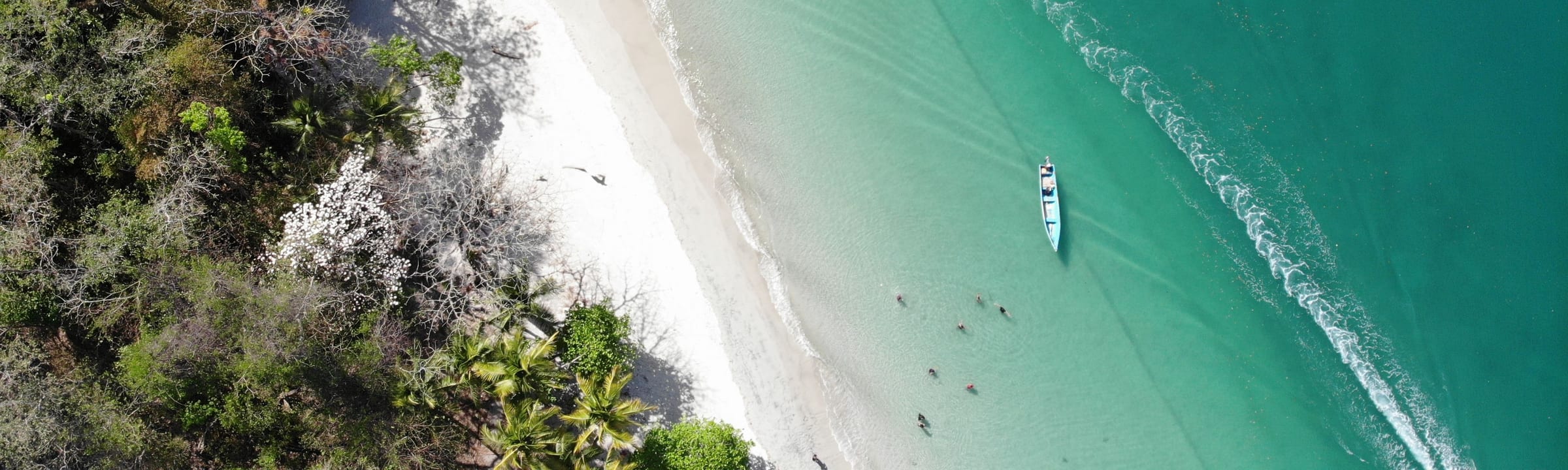
The pictures on this page show Panama's Caribbean coast in general — islands, sand spits, coastal forest. That is what people come to the Caribbean side for; our properties stand on its mainland stretch, between Colón and Portobelo, and in the Bocas del Toro archipelago.

Below are the four addresses, grouped by why people go to them.

Canal and port

one place

The Atlantic exit of the Panama Canal and the city that grew on it. This is where the canal's second-busiest side runs, where one of the world's largest free-trade zones works and where cruise liners dock. It is an address about logistics, business and rental, not about the beach.

Colón

10 propertiesView properties →

Panama's second city stands where the canal reaches the Atlantic. Colón was founded in 1850 as the terminus of the world's first transcontinental railway, and it has lived on transit ever since: the port, the free-trade zone, the cruise terminal. The new Agua Clara locks, opened in 2016, are here too, with a viewing platform, as is the Atlantic Bridge over the canal.

Worth knowing in advance: the city itself is working-class and poor, with a difficult reputation, and nobody comes to the Caribbean side for its sake. Colón in our catalogue means the addresses around the city: along the road to Portobelo and on the shore east of the port. The value of the address is logistics: an hour to the capital, a quarter of an hour to the locks, Tocumen airport by motorway.

Panama City ~1 hrTocumen ~1 hr 15Agua Clara locks ~15 min

Costa Arriba

two places

The road east from Colón along the shore is Costa Arriba itself. An hour and a half from the capital, and the bays with clear water begin, along with wooded headlands and old Spanish forts. Almost all our properties on the Caribbean side are concentrated here: a gated development on a two-kilometre beach and a historic bay on the UNESCO list.

This is a coast, not a resort: there is no hospital of its own, no international school and no large supermarket along the road — for all of that people drive to Colón or to the capital.

María Chiquita

6 propertiesView properties →

A village on the road between Colón and Portobelo, twenty kilometres short of the latter — and the main Caribbean address in our catalogue. Beside the village stands Playa Escondida: a gated development in a valley between hills, with a two-kilometre beach of pale sand, a marina, pools and its own road through the mountains. The water here is calm and clear — the thing the Pacific side does not offer.

The development works as a resort: restaurants, a beach club, rental. Beyond its gates there is the village and the road. Shops, clinics and schools are in Colón, half an hour each way; this is an address for weekends and for rental, not for permanent life with children.

Panama City ~1 hr 15Colón ~30 minPortobelo ~30 min

Portobelo

1 propertyView properties →

The bay through which Peru's silver left for Spain in the seventeenth and eighteenth centuries. The forts, batteries and customs house built to defend it have stood on the UNESCO World Heritage list since 1980, together with the San Lorenzo fortress at the mouth of the Chagres. Since 2012 the site has been on the list of heritage in danger — because of the condition of the structures and the building around them; in 2024 it was kept on that list. The forts are open, without tickets and without restoration, and that is part of their character.

Portobelo itself is a small fishing village with a strong Afro-Caribbean congo culture. Every year on 21 October thousands of pilgrims come here to the Black Christ — one of the country's principal religious events. The nearest beaches and Isla Grande are reached by boat. There is little infrastructure, and the road to Colón takes an hour. A place for those who want history and quiet rather than service.

Panama City ~1 hr 45Colón ~1 hrUNESCO forts — in the village

The Caribbean in pictures

Archipelago

one place

The other end of the country: islands in the north-west, near the border with Costa Rica. You do not drive here — you fly, an hour from the capital. It is a separate world with its own rhythm, and the logic of buying here is an island one: a boat instead of a car, an airport instead of a highway.

Bocas del Toro

An archipelago in the country's north-west, near the border with Costa Rica: the main island of Isla Colón with the town of Bocas Town and its airport, and around it islands, mangroves, reefs and surf spots. An hour by air from the capital; by road, almost a day's travel. Boats run between the islands, and that is the only transport.

Bocas lives on tourism: hotels on stilts, diving, the bars of Bocas Town. There are many foreigners here, and English is heard everywhere. Island life means island limits: for serious medicine people fly to the capital, building materials arrive by boat, and the price of everything imported is above mainland levels. We have no properties in the archipelago yet — when they appear, a link will appear here.

Panama City ~1 hr by airAirport — on the islandAlmirante 30–45 min by boat

How to choose

If the four addresses still look like one list — here are five scenarios, and a shore for each.

WEEKENDS
A different sea an hour away
María Chiquita — clear water, a gated development, an hour and a half from an office in the capital.
RENTAL
A resort that works without you
María Chiquita — a development with a marina and a beach club rents all year round.
LOGISTICS
Closer to the canal and the port
Colón — the free-trade zone, the cruise terminal, an hour to the capital and to Tocumen.
HISTORY
Living by the UNESCO forts
Portobelo — the bay of the silver fairs, forts without tickets, quiet and boats.
ISLANDS
Leaving altogether
Bocas del Toro — an archipelago, an hour by air, a boat instead of a car.

The Caribbean in one table

A comparison by what really separates Panama's Caribbean addresses: why people go there, what is there and how far it is to the capital.

PlaceCharacterWho it suitsTo Panama City
ColónPort, canal, free-trade zoneBusiness and rental near logistics~1 hr
María ChiquitaA gated beach developmentA second home and rental by clear sea~1 hr 15
PortobeloA historic bay, fortsThose looking for history and quiet~1 hr 45
Bocas del ToroArchipelago, tourismIsland life for good~1 hr by air

Travel times are along the Panama City — Colón motorway and the coastal road, and are approximate. To Bocas del Toro by land is almost a day; practically everyone flies.

Frequent questions about buying on the Caribbean coast

This material is for information only and is not legal advice. The terms of your specific case are confirmed by a licensed Panamanian lawyer.

A different sea to match your goal

An apartment in a gated development on clear water an hour from the office, a house by the UNESCO forts, or an address next to the canal and the port — on Panama's Caribbean side there is a shore for every goal. Tell us yours, and instead of a catalog you will get a short list: with title and foreign-buyer quota checked.