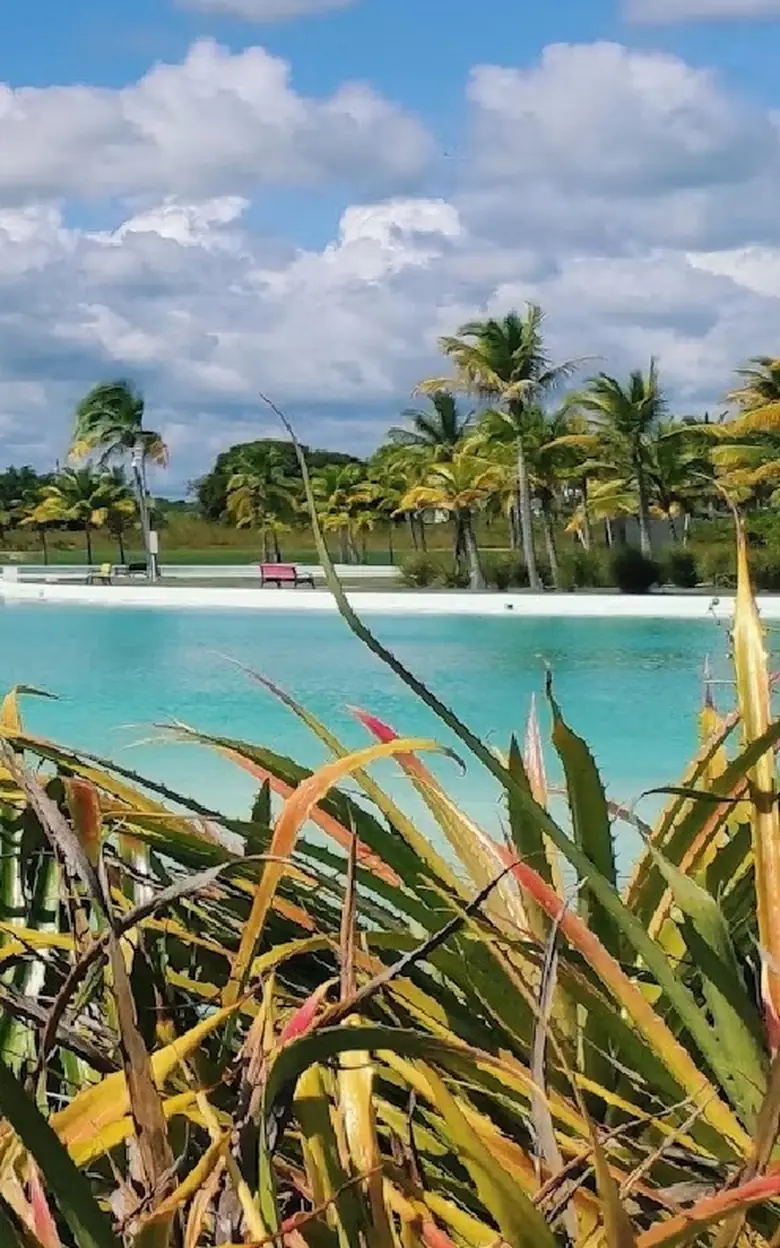
An hour's drive from the capital and the city ends. What follows is a strip of beaches Panamanians call the «dry arc»: noticeably less rain than the rest of the country, and a longer season. The eight districts along this stretch differ less in their beaches than in how far they are from a hospital, a school and a supermarket.
20 min – 2 hr
From Panama City
2
Airports within an hour
8
Districts on the coast
Arco Seco
The dry arc: less rain
The coast
The Pacific shore west of the capital is one road and eight exits off it. The Pan-American Highway runs along the sea, and almost every coastal town sits five to ten minutes from it. That decides everything here: the further the exit, the cheaper the land and the longer the drive to a hospital.
The stretch from Arraiján to Río Hato falls inside what is called the Arco Seco — the dry arc. It gets noticeably less rain than the Caribbean side or the mountains, and the dry season from December to April is genuinely dry. That is why Panama's first resort towns were built on this side rather than the Caribbean.
The sand on the Pacific beaches is dark and volcanic. For anyone arriving in search of postcard white sand, this usually comes as a surprise. The tides are their own thing too: the range reaches several metres, and at low tide the beach retreats a long way out.
Below are eight districts, grouped by distance from the capital, because that is what decides the most.
At the city's edge
One district
The western shore of the bay is formally outside the capital, but closer in time than some of the capital's own districts. The Bridge of the Americas, twenty minutes on the highway, and the sea begins. This is the only part of the coast from which commuting into the city daily is realistic.
The price of being close is the port side of the bay for a neighbour, and the queues heading into the capital at peak hour.
A beach on the western shore of the bay, just past the Bridge of the Americas. The closest sea to the capital: half an hour to the banking district outside peak hour. From the shore you can see the line of ships waiting to enter the canal, and behind the town the rainforest begins.
Two large resort hotels stand here, and housing in this part is aimed at a weekend second home rather than permanent living. For anyone who works in the city and wants to wake up by the sea, this is the only realistic option on the whole coast.
Panama City 20–30 min·Tocumen ~1 hr·Casco Viejo 20–25 min
The Chame peninsula
One district
The exit at kilometre ninety-one leads not to a town but onto a peninsula more than ten kilometres long. At its narrowest it is only two hundred metres across: the bay on one side, the open ocean on the other, and you can walk from one water to the other.
From December to April the northern trade wind blows steadily here — fifteen to twenty-five knots, with the water at twenty-eight degrees. That has made the peninsula Panama's main kitesurfing spot and one of the better-known ones in Latin America. The rest of the year it is quiet, and the village lives as it always has: fish is sold straight off the boats.
A peninsula with two different shores. On the bay side there is a wide shoal where low tide uncovers up to a hundred and fifty metres of sand; this is the kite spot that draws people from across the continent from December to April. On the ocean side the sand is white with dark streaks, the water is clearer, and people simply swim.
At the far tip of the peninsula, by Playa Caracol, a large resort development has grown up in recent years — several phases of residential complexes right at the water. This is where the bulk of what is on offer on the coast is concentrated. Everyday infrastructure on the peninsula is thin: two small shops, a few restaurants, and for anything else people drive to Chame or to Coronado, half an hour away.
Panama City ~1 hr 30·Coronado 30–40 min·Tocumen ~2 hr
The sunny coast
Three districts
An hour to an hour and a half from the city — the historic core of Panama's coast. The country's first resort towns were built here, and over fifty years real infrastructure grew up around them: hospitals, schools, supermarkets, banks.
This is the only stretch of coast where you can live year-round without depending on trips to the capital for the basics.
Panama's first resort town and still the capital of the coast. It has what nothing else on this shore has: several shopping centres, a clinic, banks, pharmacies, international schools and a golf course. More foreigners live here than in any other coastal town in the country, and the English-speaking community formed long before the current wave of arrivals.
People buy in Coronado when they want the beach without giving up the services they are used to. The other side of that is that it is no longer a quiet town: in high season and at weekends it is busy, and prices are higher than in its neighbours.
Panama City 1 hr 15 – 1 hr 30·Río Hato 30–40 min·Tocumen 1 hr 30 – 2 hr
The neighbouring town west of Coronado, with the same infrastructure in smaller form and a 24-hour hospital — an important argument for anyone living on the coast permanently.
San Carlos is known for its waves: Playa El Palmar is one of the most accessible places to surf in the country, with board rental and schools. The road into the mountains starts here too, up to Altos del María, where it is several degrees cooler.
Coronado 15 min·Panama City ~1 hr 30·Río Hato 25–35 min
Gorgona
The full name is Nueva Gorgona. The closest town of the «sunny coast» to the capital, and noticeably more Panamanian in who lives there than Coronado. There are shops, a clinic and a fish market where the catch is sold straight off the boats; for anything else people drive to Coronado, ten minutes away.
Prices here are appreciably lower than next door, with the same beach and the same road. Playa Malibú is a well-known surf spot. Anyone looking for the coast without the resort premium is usually shown Gorgona.
Panama City ~1 hr·Coronado 10–15 min·Tocumen 1 hr 20 – 1 hr 50
The coast in pictures
The resort strip
Three districts
Further west, closer to Coclé province, the zone of the large resorts begins. There is less everyday life here and more hotels, golf courses and gated perimeters.
The coast's second airport stands here too — Río Hato. It takes seasonal charters from Canada, and in high season the beach is half an hour away instead of two hours from Tocumen.
Playa Blanca
A resort stretch further west: hotels, apartment complexes and a long beach. There is not much everyday infrastructure — there is a shopping centre with a 24-hour supermarket and a pharmacy, but for medical care people drive to San Carlos.
Playa Blanca is bought more often to rent out and to visit seasonally than to live in permanently: prices are lower than in Coronado, and rental demand in the dry season is high. In low season it is noticeably quieter.
Panama City ~2 hr·Río Hato 15–20 min·San Carlos 25–35 min
Buenaventura
A gated resort town designed as a small town in its own right: a central square with a church and an old corotú tree, a shopping arcade, a hotel from an international chain and a championship eighteen-hole golf course by Nicklaus Design.
From the highway to the gates is five kilometres of road through dry tropical forest, and past that a guarded perimeter. This is the most closed and the most expensive address on the coast. It is bought by people who want not the beach as such, but a managed environment with service.
Panama City ~1 hr 45·Río Hato 10–15 min·Highway 5 km
Río Hato
First of all this is an airport. Scarlett Martínez International, with a 2,450-metre runway, stands three kilometres from the town and takes seasonal charters from Canada — Montreal, Toronto, Quebec. It has no scheduled domestic flights, and its traffic depends heavily on the season.
The town itself is not a resort: it is a working settlement along the highway. The value of the address here is logistics — anyone flying to the coast several times a year saves nearly two hours each way.
RIH airport 5 min·Panama City 1 hr 45 – 2 hr·Coronado 30–40 min
How to choose
If the districts still look like one mixed list — here are seven scenarios, each with its address.
PROXIMITY
Commute to the city daily
Playa Bonita — half an hour to the banking district outside peak hour.
YEAR-ROUND
Live here permanently
Coronado, San Carlos — hospitals, schools, supermarkets and banks on the spot.
PRICE
Buy for less
Gorgona — the same beach and the same road as Coronado, without the resort premium.
PRIVACY
A gated perimeter
Buenaventura — guarded grounds, golf and hotel service.
INCOME
Rent out seasonally
Playa Blanca, Coronado — high demand in the dry season from December to April.
WAVES
Wind and water
Punta Chame — kitesurfing from December to April. San Carlos and Gorgona — surfing at Playa El Palmar and Playa Malibú.
LOGISTICS
Arrive by charter
Río Hato, Buenaventura — RIH airport fifteen minutes away instead of two hours from Tocumen.
The whole coast in one table
A comparison by what decides things on this shore: how long the drive to the capital is, what is available on the spot, and what the district suits.
District
Character
Who it suits
To Panama City
PlayaBonita
Sea near the city, resort-like
Those who work in the capital
20–30 min
PuntaChame
Peninsula, kitesurfing, new development
Sportspeople and buyers by the water
~1 hr 30
Gorgona
Panamanian town, surfing
Those after the coast without the premium
~1 hr
Coronado
The capital of the coast
Those moving permanently
1 hr15 –1 hr 30
SanCarlos
Quieter than its neighbour, hospital nearby
Permanent residents and surfers
~1 hr 30
Buenaventura
Gated resort, golf
Those after privacy and service
~1 hr 45
RíoHato
A town by the airport
Those flying in several times a year
1 hr45 –2 hr
PlayaBlanca
Hotels and rentals
Seasonal owners
~2 hr
Travel times are approximate and vary with the hour: on the Arraiján — La Chorrera stretch the drive is noticeably longer at the morning and evening peaks.
Common questions about buying on the coast
From twenty minutes to two hours, depending on the district. There is one road — the Pan-American Highway. The main delay is not on the coast but on the way into the capital: the Arraiján — La Chorrera stretch stands still at peak hour.
Yes. This stretch of shore belongs to what is called the Arco Seco — the dry arc — where noticeably less rain falls than in the rest of the country. The dry season runs from about December to April.
In Coronado and San Carlos, yes: there are clinics, a 24-hour hospital, schools, supermarkets and banks. In the other districts, for serious medical care people drive either to Coronado or to the capital. That is the first thing to check against your own scenario.
It depends on the district. Tocumen International near the capital takes the main flow of flights. Scarlett Martínez airport in Río Hato is closer to the western part of the coast, but it works with seasonal charters, mainly from Canada, and has no scheduled domestic flights.
Dark and volcanic — not Caribbean white. The tides are strong: the range reaches several metres, and at low tide the beach retreats a long way from the line of houses. This is worth seeing in person before buying, rather than in photographs.
This material is for information only and is not legal advice. The terms of your specific case are confirmed by a licensed Panamanian lawyer.
A coast to match your goal
A weekend house, a permanent move, a seasonal rental or land to hold — on this shore each goal has its own exit off the highway. Tell us yours, and instead of a catalog you will get a short list: with title and foreign-buyer quota checked.