Payment Plans & Mortgages in Panama: How Foreign Buyers Can Finance Real Estate
Buying property in Panama does not always mean paying the full price immediately. For many international buyers, Panama offers two main financing routes: developer payment plans and bank mortgages. These two options work very differently. A payment plan is usually connected to a pre-construction project and allows the buyer to pay gradually while the building is being constructed. A mortgage is a bank loan, usually used for completed or nearly completed property. Understanding the difference is essential for anyone planning to buy real estate in Panama. This is not legal advice, and the figures below are general market ranges rather than guaranteed terms — confirm them with the specific bank, the developer and a licensed Panamanian lawyer.
Developer Payment Plans in Panama
Developer payment plans are common in Panama, especially for pre-construction apartments, branded residences and new residential projects in Panama City, beach communities and growing investment areas. The logic is simple. The buyer reserves a unit before completion and pays the purchase price in stages. This allows buyers to secure today's price while the project is still being built.
Typical Payment Plan Structure
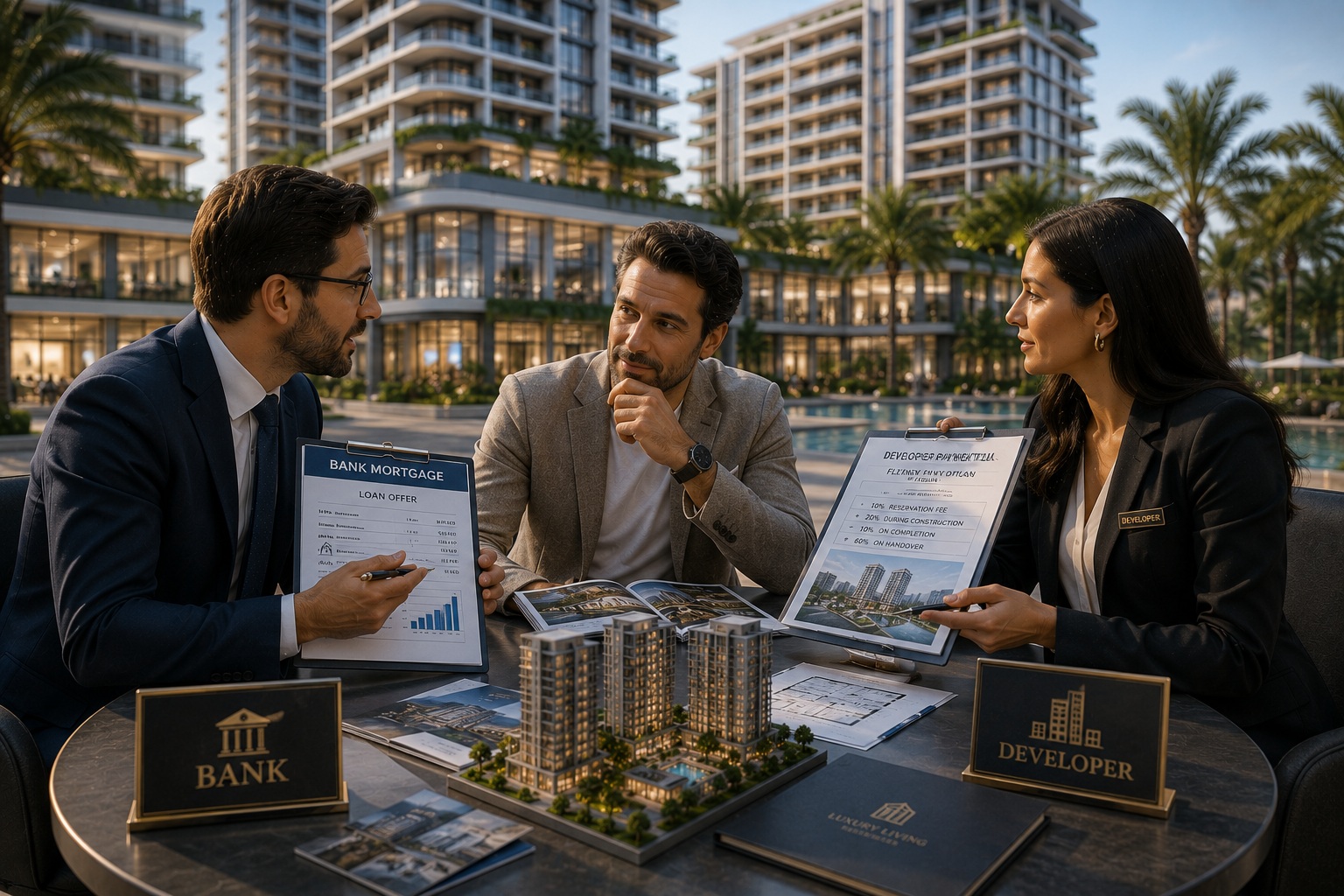
A standard payment plan may look like this. Reservation deposit: usually a small fixed amount to take the unit off the market. First payment: often 10% to 20% after signing the purchase agreement. Construction-stage payments: usually another 20% to 40% paid in installments during construction. Final payment: the remaining balance paid at delivery, closing or transfer of title. A common structure may be 10% on reservation or contract, 30% during construction and 60% at delivery. In some projects, the developer may offer 20% down and 80% at closing. In others, especially luxury projects, buyers may be asked to pay 30% to 50% before completion. The exact structure depends on the developer, project stage, demand, location and construction timeline.
Why Buyers Like Payment Plans
Payment plans are popular because they reduce the initial cash burden. Instead of paying the full amount immediately, the buyer can spread payments over 18, 24, 36 or even more months, depending on the project. This is especially attractive for investors who want to enter early, build equity during construction and complete the purchase later. For international buyers, payment plans can also provide time to organize funds, sell another property, arrange banking or apply for residency.
Payment Plans Are Not the Same as Mortgages
This is one of the most important points. A developer payment plan is not usually a long-term loan. It is normally a construction-period payment schedule. In most cases, the buyer must pay the remaining balance when the project is completed. That final payment may come from personal funds, a bank mortgage, resale of the unit, or refinancing. This means buyers should never assume that a payment plan solves the entire financing question. It often only solves the period before delivery.
Developer Financing After Completion
Some developers may offer extended financing after delivery, but this is less standard and should be reviewed carefully. When available, developer financing may involve: higher interest rates than banks, shorter repayment terms, larger final balloon payments, strict default clauses, limited flexibility, direct contract enforcement by the developer. This can be useful in certain cases, but it should not be treated as automatically better than bank financing. The contract must be reviewed by a lawyer.
The Main Risk of Buying with a Payment Plan
The biggest risk is not the first payment. It is the final payment. A buyer may comfortably pay 30% during construction but then discover that bank financing is not approved at completion. This can create pressure, penalties or even loss of rights under the contract. Before entering a payment plan, every buyer should ask: How much must be paid before delivery? When is the final balance due? Can the buyer obtain a mortgage at closing? Which banks work with this project? What happens if mortgage approval is delayed? Can the unit be resold before completion? Are payments refundable? What are the penalties for default? A payment plan is useful only when the exit strategy is clear.
Mortgages in Panama for Foreigners
Foreigners can obtain mortgages in Panama, but the process is usually more demanding than for local residents. Panamanian banks generally want to see stable income, clear source of funds, strong documentation and a meaningful down payment. The property itself must also be acceptable to the bank. Completed titled property is usually easier to finance than complex structures, concession property, remote land or unfinished developments.
Typical Mortgage Conditions for Foreign Buyers
Mortgage conditions vary by bank and applicant profile, but foreign buyers commonly see the following ranges. Down payment: usually 30% to 40%. Loan-to-value: commonly around 60% to 70%. Loan term: often 15 to 20 years, sometimes longer for stronger profiles. Interest rate: often around 5% to 9%, depending on the bank, borrower, property type and market conditions. Currency: usually U.S. dollars. Minimum loan size: some banks may prefer loans above a certain amount. Age limits: many banks want the loan repaid before a certain borrower age. These are general market ranges, not guaranteed terms. Every case depends on the borrower and the bank.
Residents vs Non-Residents
Foreign residents usually have better chances than non-residents. A foreign buyer with legal residency, local bank account, local income history or established financial presence in Panama may look stronger to a bank than a buyer applying from abroad with no local record. Non-residents can still obtain financing, but they should expect stricter documentation and a more conservative loan-to-value ratio.
Required Documents for Foreign Mortgage Applicants
Banks commonly request: passport, second ID, proof of income, tax returns, bank statements, employment letter or business ownership documents, credit references, source of funds documents, personal financial statement, property purchase agreement, property appraisal, life insurance or mortgage insurance, proof of down payment, legal residency documents if available. Documents from abroad may need apostille, translation or bank verification. This is why the mortgage process should begin early.
Income Verification
Panamanian banks are careful with income verification. For salaried employees, the bank may request employment letters, payslips, tax filings and bank statements. For business owners, the process can be more complex. Banks may want company financial statements, tax returns, shareholder records and evidence of stable distributions or salary. For retirees, pension income may be easier to explain if it is stable and documented. For investors, passive income must be clearly proven. The stronger and cleaner the income file, the better the chance of approval.
Mortgage Rates and Total Cost
The interest rate is only one part of the cost. Buyers should also consider: bank fees, appraisal fees, legal fees, insurance, life insurance, property insurance, registration costs, early repayment restrictions, taxes and closing costs. A mortgage that looks attractive at first may become less attractive after all costs are included. Always compare the total cost, not only the headline rate.
Can Foreigners Finance Pre-Construction Property?
Sometimes, but usually not at the earliest stage. Banks are more comfortable financing property when it is completed, close to completion or part of a project already approved by the bank. During construction, the developer payment plan usually covers the early period. At completion, the buyer may apply for a mortgage to pay the remaining balance. This is why pre-construction buyers should ask whether banks are already financing the project. If several banks are familiar with the development, the process may be smoother.
Paying in Cash
Paying in cash remains a powerful position in Panama. A cash buyer can often negotiate a better price, upgrades, payment terms or closing flexibility. Cash also removes the risk of bank refusal and simplifies the transaction. But even cash buyers should keep a liquidity reserve for closing costs, furnishing, taxes and possible delays, rather than putting every available dollar into the property itself.
Matching the Financing to Your Profile
For salaried employees: clean, documented salary is the simplest profile for a bank; start the mortgage conversation early. For business owners: prepare company financial statements and evidence of stable distributions; expect closer scrutiny. For retirees: stable, documented pension income makes the case easier; confirm the documents are acceptable to the bank. For investors: prove passive income clearly. For families: choose financing based on long-term affordability, not only purchase price. For residency-focused buyers: confirm immigration requirements before choosing the payment structure. For cash buyers: use your stronger position to negotiate price, upgrades, payment terms or closing flexibility.

Common Mistakes Foreign Buyers Make
The most common mistake is assuming that developer payment plans are long-term financing. The second mistake is signing a pre-construction contract without knowing how the final payment will be made. The third mistake is assuming that foreign mortgage approval is automatic. The fourth mistake is underestimating documentation requirements. The fifth mistake is ignoring exchange controls or transfer limits in the buyer's home country. The sixth mistake is not checking whether the project is bank-approved. The seventh mistake is buying for residency without confirming that the property qualifies. The eighth mistake is comparing Panama financing directly with U.S. or European mortgage systems.
Practical Example
Imagine a buyer purchasing a US$300,000 pre-construction apartment. The developer may ask for: US$10,000 reservation deposit, 20% at contract signing, 30% during construction, 50% at delivery. This means the buyer may need to pay US$150,000 before delivery and still find US$150,000 at closing. If the buyer expects to use a mortgage for the final balance, bank approval should be discussed long before completion. If the bank approves only 60% of the appraised value, the buyer may be fine. But if the appraisal comes in lower than the contract price, or the buyer's income is not accepted, the buyer may need more cash than expected. This is why conservative planning is essential.
The Smart Way to Finance Property in Panama
The best financing strategy begins before selecting a property. First, define your budget. Second, decide whether you need financing or simply prefer it. Third, check whether you are likely to qualify for a mortgage. Fourth, compare completed property and pre-construction options. Fifth, review payment schedules carefully. Sixth, confirm whether the property supports your residency strategy. Seventh, keep extra liquidity for closing costs, furnishing, taxes and delays. A well-financed purchase feels calm. A poorly planned purchase creates pressure.
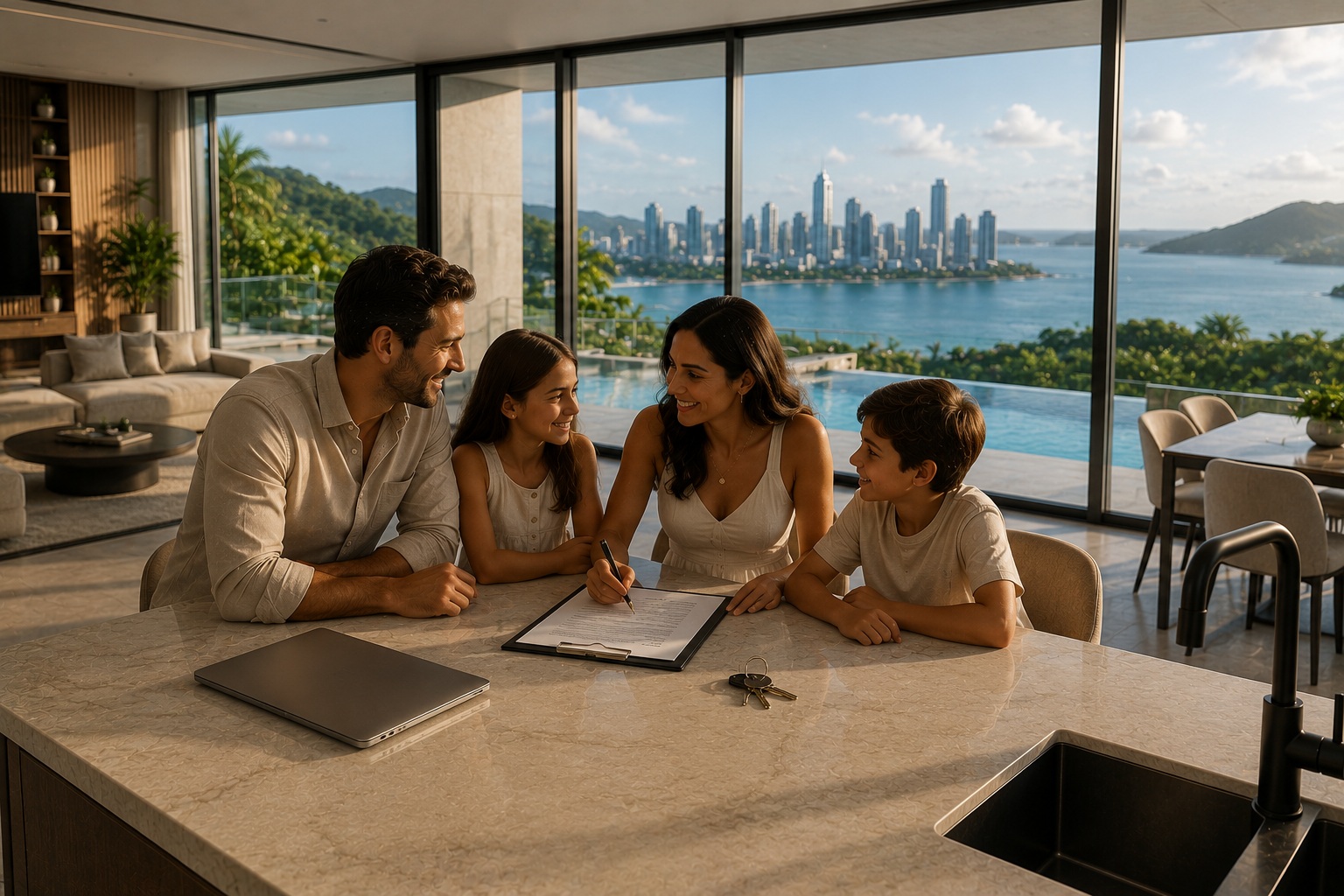
Three Routes: Payment Plan, Mortgage, Cash
A developer payment plan can make pre-construction property accessible by spreading payments over the construction period, but it usually leaves a large final balance at delivery. A bank mortgage can help buyers purchase completed homes with leverage, but it requires a strong income profile, a meaningful down payment and patient paperwork. Paying in cash remains powerful for negotiation and removes the risk of bank refusal. Each route has advantages. But each also has risks. The right choice depends on your income, timing, residency goals and readiness for the paperwork.
Final Thoughts
Panama offers flexible options for foreign property buyers. Developer payment plans can make pre-construction property accessible. Bank mortgages can help buyers purchase completed homes with leverage. Cash purchases remain powerful for negotiation. Each route has advantages. But each also has risks. The most important rule is simple: do not look only at the price of the property. Look at the timing of every payment. A good property purchase is not only about what you buy. It is about whether the financing structure fits your life, your income, your residency goals and your long-term investment strategy. In Panama, the best buyers are not always those with the largest budgets. They are the ones who plan the structure correctly from the beginning.