About Panama · About the country
The Language of Panama
Spanish, identity and the voices of a global crossroads
In Panama, language is more than a way to communicate. It reflects the country's history, its geography and its unique place in the world. Panama speaks with a Spanish voice, a Caribbean rhythm, Indigenous roots and an international accent.
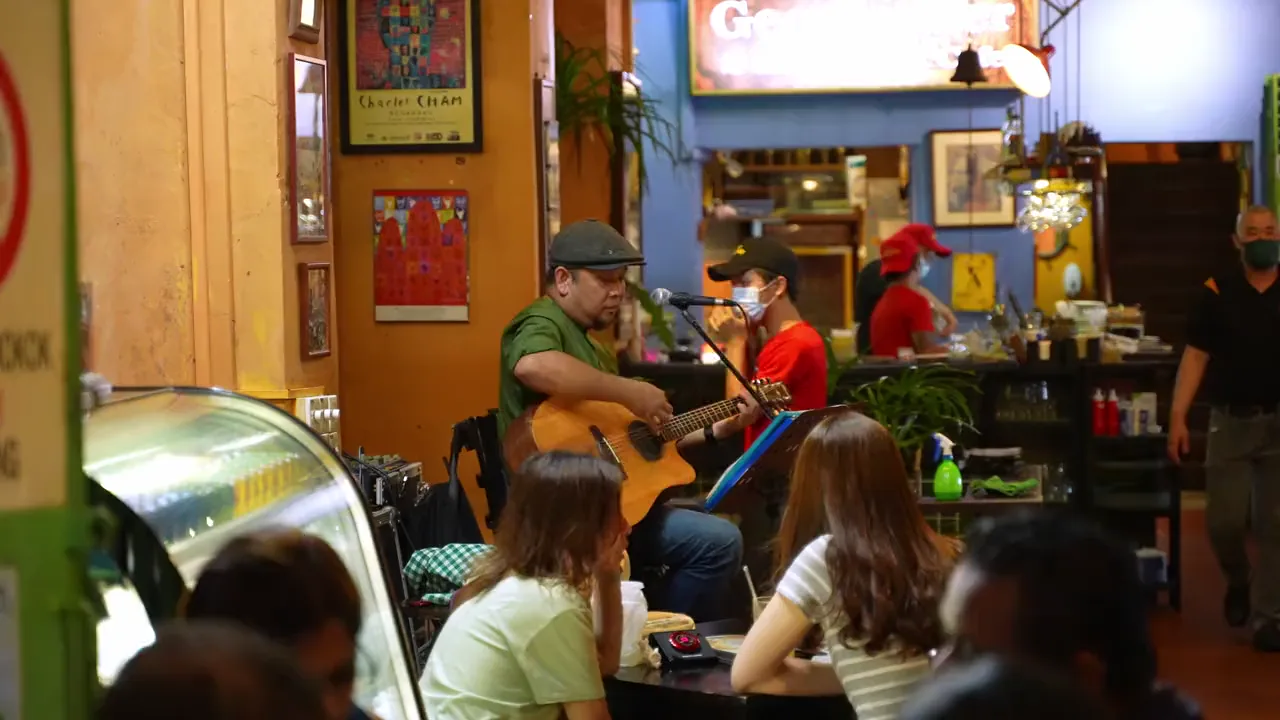
Panama is a small country with a remarkably international character. It links North and South America, the Atlantic and the Pacific, global trade, finance, tourism and migration. Its language tells the same story. For travelers, investors and anyone thinking about living in Panama, understanding the country's language is one of the best ways to understand the country itself.
What language is spoken in Panama?
The official language of Panama is Spanish. It is the language of government, schools, the media and business, and of everyday life as a whole.
Whether you are strolling through Panama City, relaxing on a Pacific beach, heading up to Boquete in the mountains or wandering the historic streets of Casco Viejo, Spanish is what you will hear most.
Panamanian Spanish belongs to the family of Latin American Spanish, but it has a character all its own: fast, expressive and warm, marked by the country's Caribbean, Indigenous and international history.
In expat neighborhoods you can get by with almost no Spanish. But it is the language that opens the door to a deeper, easier and more genuine life in Panama.
Panamanian Spanish: a language with rhythm
Panamanian Spanish has a sound you learn to recognize. Next to other varieties of Spanish it seems faster and more relaxed: in everyday speech, sounds are clipped, run together and softened. This is especially noticeable in Panama City and along the coasts, where the Caribbean influence is stronger.
As in many Caribbean dialects, there is music in Panamanian speech — plenty of energy, humor and emotion. The language mirrors the country's character: open, dynamic and always on the move.
Anyone learning Spanish will need a little time to get used to the Panamanian variety. But once your ear is tuned, it becomes one of the most enjoyable ways to feel the pulse of local life.
How history shaped the language of Panama
Spanish arrived in Panama in the colonial era, when the isthmus became a vital part of the Spanish Empire. For centuries gold, silver, goods and people passed across it between the Pacific and the Caribbean. That constant movement transformed not only the economy but also the way people spoke.
Panamanian Spanish absorbed words, expressions and rhythms from many sources:
- Indigenous languages contributed the names of places, dishes and cultural concepts.
- African heritage came in through music, oral traditions and everyday speech.
- Caribbean English and Jamaican Creole arrived with the workers who built the Panama Railroad and the canal.
- American English left its mark over decades of the Canal Zone, international business, aviation and banking.
The result is a Spanish you could never mistake for any other — unmistakably Panamanian.
English in Panama: where it helps and where it doesn't
English is widely understood in certain parts of the country — above all in Panama City and in international business, tourism, banking, logistics and real estate. Thanks to the canal, Panama has long-standing ties to the English-speaking world.
English is familiar in expat communities, international schools, hotels, restaurants and professional services. In places popular with foreigners — Panama City, Boquete, Coronado and parts of the Pacific coast — you hear it more often than in the countryside.
Even so, Panama is not an English-speaking country.
Government offices, local contracts, conversations with neighbors, doctor's visits and many everyday services usually run in Spanish. For anyone buying a home or relocating, basic Spanish is a real advantage: it helps with negotiations, at the bank, with utilities, with renovations and with life in your own home.
Indigenous languages
One of the most important parts of Panama's linguistic heritage is its Indigenous languages. The country is home to the Guna, Emberá, Wounaan, Ngäbe, Buglé, Bribri and Naso, and many of them preserve their own languages, traditions and ways of life.
Guna is spoken in Guna Yala and in Guna communities across the country. Ngäbere is one of the most widely spoken Indigenous languages in Panama; it is spoken by the Ngäbe, especially in the west of the country. The Emberá and Wounaan languages are heard in communities along rivers and in the rainforest.
These languages are not historical relics. They continue to shape identity, family life, rituals, stories, crafts and the way communities are organized.
Panama is not one culture, one voice or one story. It is a meeting place of many worlds.
What the names tell us
Many place names in Panama reveal the country's linguistic layers. Some come from Spanish colonial history, others from Indigenous languages, and still others reflect life at sea, local geography or cultural memory.
Guna Yala, Chiriquí, Coclé, Veraguas, Darién — these names carry historical and cultural meaning. They are a reminder that Panama's identity took shape long before its modern cities, financial towers and canal.
The names on the map are more than labels. They are fragments of the country's memory.
Language, business and choosing a home
In business, Spanish is essential: legal documents, government procedures, real estate transactions, permits, utilities and many banking processes are conducted in Spanish.
At the same time, Panama's international economy makes English highly valuable. Many lawyers, real estate agents, bankers, developers and consultants who work with foreigners speak English. This bilingual business environment is one of Panama's advantages for investors: the country remains deeply Latin American while functioning as a global business hub.
Language also matters when choosing where to live:
- In Panama City's international neighborhoods — Punta Pacífica, Costa del Este, Obarrio, San Francisco, Casco Viejo — English-language services are easier to find.
- Boquete and Coronado have established communities of foreigners where English is heard often.
- In local neighborhoods, beach towns, mountain villages and the interior provinces, Spanish becomes far more important.
That does not make these places any less appealing. On the contrary, they often offer a more authentic Panamanian life, close-knit neighbors and deep cultural immersion. But it is worth understanding the language environment before choosing a property: an apartment in Panama City, a house on the Pacific coast and a home in the mountains of Chiriquí are three very different linguistic and social experiences.
Spanish before you move, and phrases that come in handy
If you plan to live in Panama, it is worth learning at least the basics of Spanish. You don't need to speak perfectly: even simple phrases make life easier and relationships warmer. Panamanians generally appreciate the effort, even when the Spanish is far from perfect.
Language changes the very experience of living in a country: transactions become conversations, neighborhoods become communities, and Panama turns from a destination into a home.
- Buenos días
- good morning
- Buenas tardes
- good afternoon
- Buenas noches
- good evening / good night
- Por favor
- please
- Gracias
- thank you
- ¿Cuánto cuesta?
- how much does it cost?
- ¿Dónde está…?
- where is…?
- Quisiera ver esta propiedad
- I would like to see this property
- Estoy buscando un apartamento
- I'm looking for an apartment
- Estoy interesado en comprar una propiedad en Panamá
- I want to buy property in Panama
These phrases are especially useful at property viewings, at markets, in restaurants and taxis, and in everyday errands. And a short chat with a vendor, a taxi driver, a neighbor or a concierge will tell you more about Panama than any guidebook.
A country of many voices
Panama's language is a perfect reflection of its identity. Spanish gives the country its national voice. Indigenous languages hold its oldest memory. English connects it to global trade, foreign residents and the canal. The Caribbean influence adds rhythm, color and character.
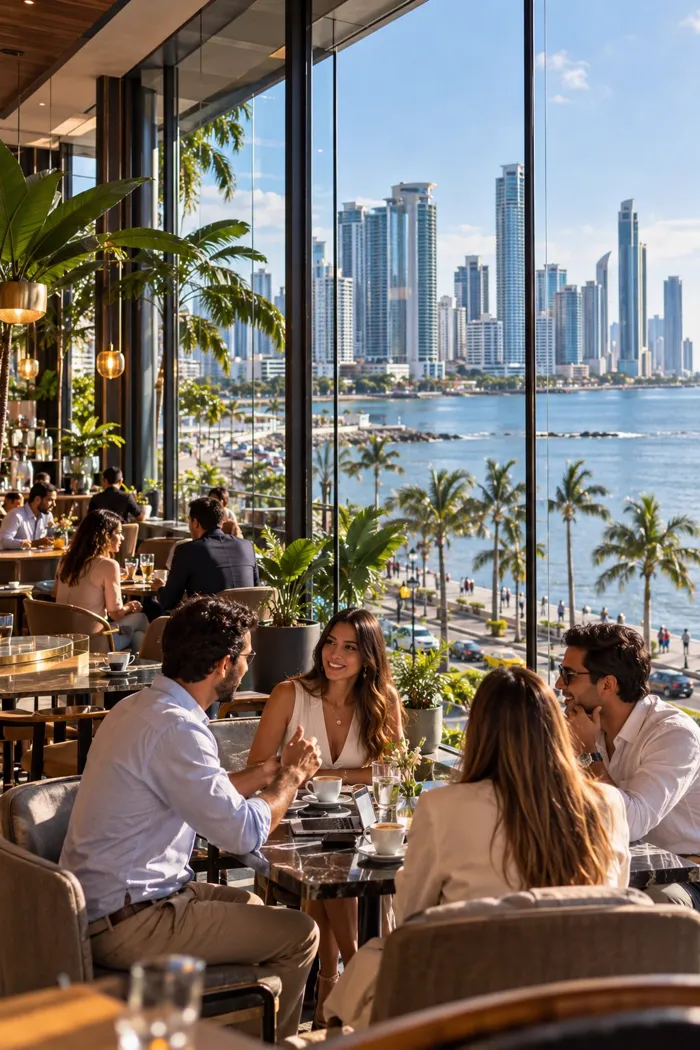
Panama is not simply a Spanish-speaking country in Central America. It is a cultural and linguistic crossroads shaped by Indigenous civilizations, Spanish colonization, African heritage, Caribbean migration, American influence and global trade. You can hear it on the streets of Panama City, on the islands of Guna Yala, in the mountain towns of Chiriquí, in the Caribbean province of Colón — and in the offices, cafés and neighborhoods where locals and foreigners meet every day.
For those who choose Panama to live, invest or retire, language is part of the lifestyle. It shapes how people work, negotiate, make friends and feel connected to the country.
To learn the language of Panama is to understand more than words: it is to understand its rhythm, its history and its soul.