Panama City

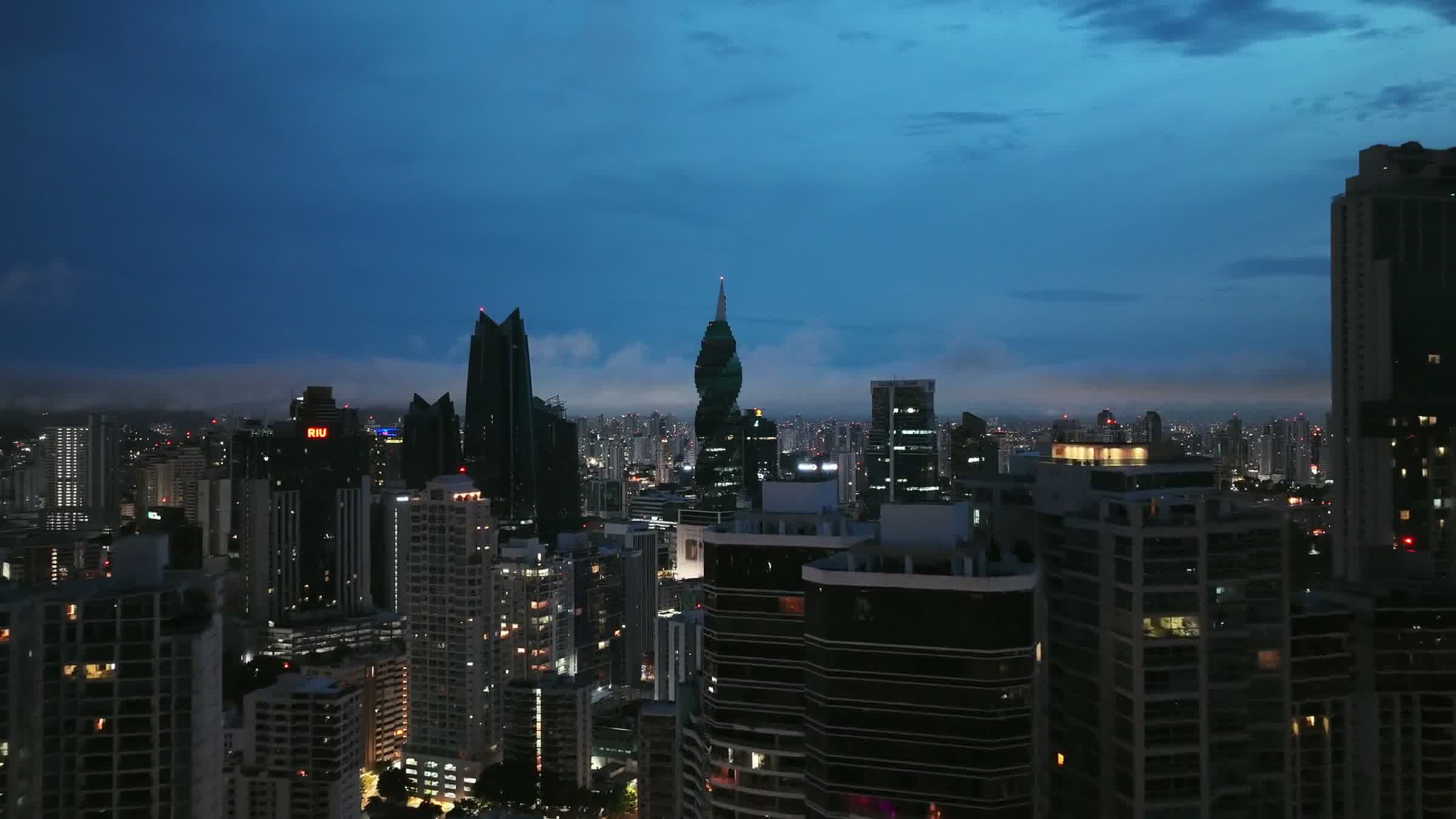
On the left, more glass towers than anywhere between Miami and Santiago. On the right, seventeenth-century colonial roofs. On the horizon, a line of freighters waiting for the canal. Three eras in one frame, and all three are working.

1904
The economy runs on the US dollar. No currency risk
0 %
Tax on income earned outside Panama
15
Districts of the capital — from the banking district to the Canal Zone
=
A foreigner's property rights equal a citizen's

A city that grew out of the water and still lives off it

The canal brings the country tolls, the ports bring cargo, and the banks serve both. Hence the skyscrapers: over the past twenty years the capital has grown a skyline that tourists regularly mistake for Dubai. Hence the mix of languages, too — on the street you hear Spanish, English, Chinese, Portuguese, and in recent years, more and more often, Russian.

For someone who has come here to buy, a few things matter, and they are surprisingly simple. The economy has run on the US dollar since 1904 — no currency risk, nothing to convert. A foreigner's property rights are the same as a citizen's: no permits, no local partner. Transactions go through the Public Registry, and title is confirmed by the state. Tax on income earned abroad is zero.

And one more thing you only understand once you are here: the city is compact. From most districts, the banking district is five to twenty minutes away. You can drive around Panama City in an hour — and change the scenery in fifteen minutes, because there is real tropical forest inside the city limits.

Below are fifteen districts, grouped not alphabetically but by how people actually choose.
Downtown and the banking district

Five districts

A few blocks along Calle 50 and Vía España are business Panama in its purest form. Banks, offices of international companies, law firms serving half the offshore world, and the restaurants where all these people have lunch. Property here is bought to save time: work is a walk away, everything else is ten minutes.

In the evening the picture changes. The offices go dark, Calle Uruguay and the surrounding streets come alive, and for a few hours the business district becomes a restaurant district.

Obarrio

15 propertiesView properties →

The business and shopping heart of the city, right next to the banking district. Offices, restaurants, shops, malls and Vía España — all within walking distance. This is a district with no pretensions to beauty: it is about convenience, and about not spending your life on the road.

Most buyers here buy to rent out. Demand is steady all year round: banking specialists arriving on contracts, consultants on projects, lawyers.

Cinta Costera ~10 minTocumen 30–40

Marbella

15 propertiesView properties →

The most compact of the central districts, entirely inside the banking zone. Hotels, offices, restaurants — and all of it fits into a few blocks you can walk across in ten minutes.

Marbella is about maximum urban density. If you like stepping out of your building straight into the city, this is it.

Calle 50 on footWaterfront 5 minMultiplaza 5–10

Bella Vista

20 propertiesView properties →

A central district where nightlife joins the offices. Calle Uruguay, the capital's main restaurant and bar street, runs right through it. Nearby is Parque Urracá, one of the few real green islands in the dense build-up.

Bella Vista is for those who want to be in the thick of it, not watch it from a window. The downside is obvious: on weekends the streets are noisy until late at night.

Banking district 5 min

El Cangrejo

8 propertiesView properties →

One of the oldest residential districts of central Panama, and perhaps the most human in the way it is laid out. The streets are shaded by trees, the buildings are low, and between them runs a dense grid of cafés, bakeries, bookshops and small restaurants from all over the world.

The difference from the glass blocks is felt at once: El Cangrejo is built for pedestrians. People here walk rather than drive, know the shopkeeper, say hello to their neighbors. Foreigners who came to stay settled on this district long ago — for its cosmopolitan feel without the sterility.

Banking district 5 minVía España on footAlbrook 10–15

San Francisco

11 propertiesView properties →

An established residential district, and a family choice. The main reason is Parque Omar: a large green space with paths, sports grounds and old trees, laid out on the site of a former golf club. In a city with little greenery downtown, that is a real advantage.

Schools, clinics and shops are close by — everything you need when you live here permanently rather than come for a week.

Multiplaza 5–10 minBanking district 5–10Tocumen 25–35

By the ocean

Four districts

The seafront strip is Panama's calling card and its most recognizable image: towers along the bay, the Cinta Costera promenade below, ships waiting at anchor. Here you pay for the water and the panorama, and the prices reflect it.

The Cinta Costera is built on land reclaimed from the bay. Where the bike paths, parks and playgrounds are now, there was water half a century ago — which is why the sea views here are so open: a strip of parkland was deliberately left between the buildings and the ocean.

Avenida Balboa

5 propertiesView properties →

A prestigious seafront avenue lined with towers facing the bay. The waterfront is literally under the windows: step out of your building and you are on a bike path that runs along the water for several kilometers.

This is one of the few addresses where three things come together at once: a water view, a central location and a walkable waterfront.

Banking district 5 min

Punta Pacífica

22 propertiesView properties →

A prestigious seafront district with the city's most recognizable towers and ocean views. Executives of international companies and foreign residents settle here, and the infrastructure is built around them.

Two neighbors define the district's reputation. Multiplaza Pacific, the country's main premium mall. And Pacífica Salud hospital, affiliated with Johns Hopkins — for many people moving here in retirement it turns out to be the deciding argument, more important than the view.

Banking district 5–10 minTocumen 30–40

Punta Paitilla

10 propertiesView properties →

A small peninsula between the banking district and Punta Pacífica — the first district of the capital to be built up with residential towers. That happened in the seventies and eighties, long before today's glass skyline, and Paitilla still keeps the character of that time: the buildings stand close together, the streets are short, and from the upper floors you can see the bay and the whole city at once.

Panama's Jewish community has long been at home here — synagogues, kosher shops and restaurants within walking distance. For those to whom this matters, Paitilla and neighboring Punta Pacífica are the first address in the country.

Banking district 5 minMulticentro on footCinta Costera 5–10

Coco del Mar

18 propertiesView properties →

A quiet seafront district between Punta Pacífica and San Francisco — on the map it sits between the two best-known addresses of the eastern bay, and somehow manages to stay unnoticed. The buildings are lower and more spread out than the neighbors', there is air between them, and by evening it gets genuinely quiet.

This is the choice for those who want the water without the showcase: the same bay views, the same closeness to the center, but without Punta Pacífica's density and without its prices.

Parque Omar on footTocumen 25–35

The city in eight frames

The east of the city

Two districts

East of the center lie Panama's newest neighborhoods — the ones built to a plan rather than grown on their own. The difference shows from the first turn: wider streets, road markings, sidewalks, trees along the roads, and a mandatory green space in every block.

There is a practical advantage too: the east is closer to the international airport. For those who fly often, that saves an hour on every trip.

Costa del Este

23 propertiesView properties →

The most successful example of planned development in the country: a business park, residential towers and gated communities arranged on a street grid with well-designed interchanges. Green, organized, family-oriented.

The international schools are concentrated here, and along the water runs the district's own waterfront with parks — its own, not the city's. Many families with children choose Costa del Este for exactly this reason: everything they need is inside the district, and they rarely have to drive into the city.

Tocumen 20–25 minBanking district 15–20Schools 5–10

Santa María

11 propertiesView properties →

A gated luxury community around a golf club: villas and premium towers, a golf course on the grounds, perimeter security, privacy.

Santa María works as a small town of its own inside the big one. For those who want a prestigious, calm environment without leaving the capital, nothing fits better.

Costa del Este 5–10 min

The former Canal Zone

Three districts

The western part of the city is territory that belonged to the United States until 1999. The strip along the canal was a separate jurisdiction with its own bases, schools, hospitals and residential townships. Panama got it back on the last day of the twentieth century.

What remains of that era is the spacious layout, the low tile-roofed houses, the enormous trees and a completely different density. It is quieter, greener and more open here than anywhere else in the capital. Many neighborhoods of the Canal Zone look more like an American suburb of the fifties than a Latin American city.

Clayton

A green residential district on the site of the former Fort Clayton military base: spacious houses, parks, international schools, calm streets. Popular with families and diplomats — the combination of safety, greenery and schools works exactly for them.

Next door is Ciudad del Saber, the City of Knowledge — a campus built on the former base: universities, research centers, non-profits, startups. The barracks became lecture halls, the parade ground a plaza.

Albrook 5–10 minAlbrook Mall 5–10Downtown 15–20

Albrook

The district by the domestic airport and Albrook Mall — a shopping center so large that locals navigate it by color-coded animal signs. The country's main bus terminal is here too: buses leave for every province.

Logistically, this is the best-connected point in the city. If you often fly domestic — to Bocas del Toro, to David, to the islands — living near Albrook is the most convenient option. Above the district rises the green hill of Cerro Ancón, with views of both the city and the canal.

Downtown 10–15 min

Amador

17 propertiesView properties →

The only place in the city where you can drive out into the ocean. The Amador Causeway is a breakwater several kilometers long, built from the rock excavated for the canal, connecting the shore to four islands: Naos, Perico, Culebra and Flamenco. The Americans built it to protect the canal entrance; the Panamanians turned it into a promenade.

A bike path and a waterfront run the full length of the causeway, and this may be the best view in the country: the glass skyline of the capital to the left, the canal entrance with its queue of ships to the right, and the islands straight ahead. Flamenco has a marina and restaurants on the water; Naos, a Smithsonian research center; at the head of the causeway stands the Biomuseo, a Frank Gehry building — his only work in Latin America.

There is not much housing on Amador, and it is a particular kind: this is not a commuter district but a place where people live for the water, the morning bike ride and the view of the canal.

Casco Viejo 10 min

The old town

Casco Viejo

Panama's historic center and a UNESCO World Heritage site. Colonial facades, narrow streets, squares shaded by trees, boutique hotels, rooftop restaurants and a view of the modern skyline across the bay — the very contrast people come here to photograph.

The quarter has a back story that explains why it stands exactly where it does. The first city, Panamá Viejo, was founded in 1519 and became the first European settlement on the Pacific coast of the Americas. In 1671 it was burned by the English privateer Henry Morgan. The survivors moved the city a few kilometers west, to a narrow headland that was easier to defend, and walled it. That walled city is Casco Viejo.

Today it is alive: some buildings have been restored as apartments, some still stand in scaffolding, some are waiting their turn. What people buy here is not square meters but history.

It is the one part of the city where documents need especially careful checking: heritage status restricts reconstruction, down to what may and may not be done with a facade.

How to choose a district

If the districts still blur into one list — here are seven scenarios, with addresses for each.

WORK
Working in the city
Obarrio, Marbella, Bella Vista — everything within walking distance, five minutes to the office
FAMILY
Living with a family
Costa del Este, Clayton, San Francisco — schools, parks, calm streets, shops close by
VIEW
An ocean view
Avenida Balboa, Punta Pacífica, Punta Paitilla
LOGISTICS
Flying often
Costa del Este for international flights. Albrook and Clayton for domestic
PRIVACY
Quiet and privacy
Santa María, Clayton
CHARACTER
Atmosphere and character
Casco Viejo, El Cangrejo
INCOME
Renting out
Obarrio, Marbella, Bella Vista: steady demand all year round from business travelers

The capital's districts in one table

A comparison by what actually sets the districts apart: the character of the place, who lives there, and how long it takes to reach the banking district.

DistrictCharacterWho it suitsTo the center
ObarrioBusiness, denseLandlords and people who work in the centeron foot
MarbellaCompact, urbanThose who want everything within walking distanceon foot
Bella VistaNightlife, restaurantsThose who like being in the thick of it5 min
El CangrejoWalkable, greenExpats here for the long term5 min
San FranciscoResidential, by Parque OmarFamilies5–10 min
Avenida BalboaSeafront avenueThose who want a view and a waterfront5 min
Punta PacíficaPremium towersResidents moving here in retirement5–10 min
Punta PaitillaThe city's first towersThe community, and those who value the twin view5 min
Coco del MarQuiet, spread outThose who want the water without the showcase10 min
Costa del EstePlanned developmentFamilies and frequent flyers15–20 min
Santa MaríaGated community, golfThose seeking privacy15 min
Clayton and AlbrookThe green former Canal ZoneFamilies, diplomats, frequent domestic flyers10–20 min
AmadorCauseway, marina, canal viewThose who live for the water15 min
Casco ViejoUNESCO heritageThose buying history10–15 min

Travel times are approximate and depend on the hour: in the morning and evening peaks they are noticeably longer.

Common questions about buying in the capital

This material is for information only and is not legal advice. The terms of your specific case are confirmed by a licensed Panamanian lawyer.

The capital, matched to your goals

Relocation, a second home, rental income or capital preservation — in Panama City, each of these goals has its own districts and its own risks. That is where we start: first the goal, then a short list, then the viewings.